


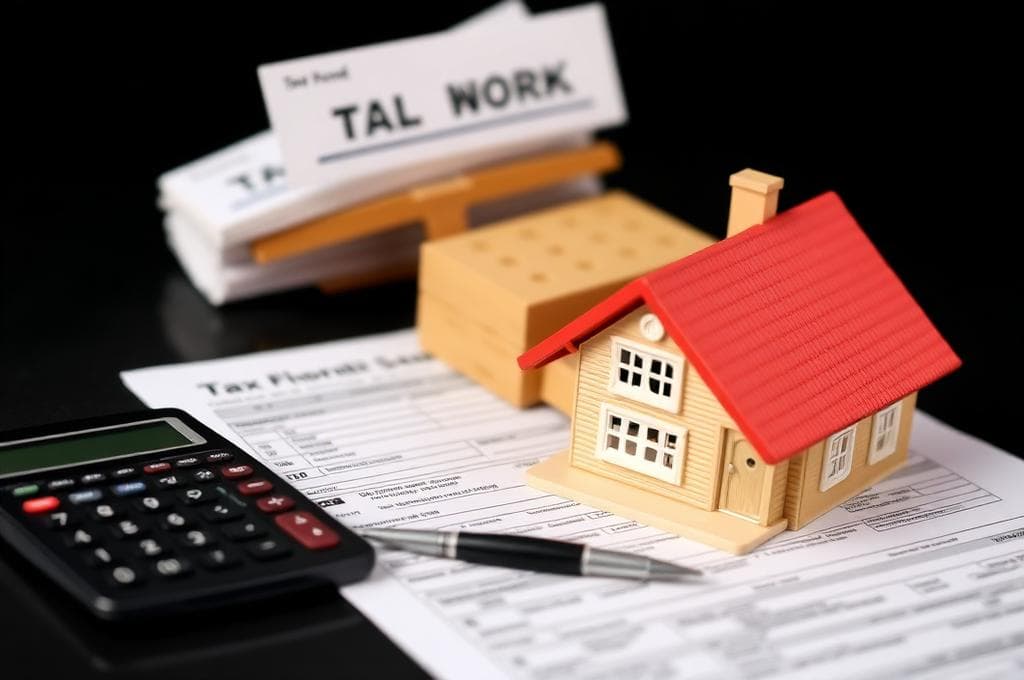
Understand capital gains taxes on home sales, the Section 121 exclusion that lets you avoid $250K-$500K in taxes, and tax planning strategies to minimize your liability.
Key Takeaways
- Section 121 exclusion lets you exclude up to $250K (single) or $500K (married) in capital gains from taxation
- Most homeowners pay zero federal tax on home sales because gains fall under the exclusion
- State taxes can add 3-13% to your tax burden depending on where you live
- Investment properties don't qualify for Section 121—capital gains are fully taxable
- Timing your sale strategically can save $10,000-$50,000 in taxes
Capital Gains Tax on Home Sales
Selling a home is one of life's major decisions — whether you're downsizing, relocating, or starting a new chapter. This is the moment when having a trusted guide makes all the difference.
When you sell your home for more than you paid, the profit is called a "capital gain." Capital gains are taxable income. On a home purchased for $300,000 and sold for $400,000, your capital gain is $100,000. Normally, long-term capital gains are taxed at 0%, 15%, or 20% depending on income level. On $100,000 gain at 15% rate, that's $15,000 in federal taxes.
However, the federal government offers Section 121 exclusion: you can exclude up to $250,000 of capital gains if you're single, or $500,000 if married filing jointly. This means most homeowners pay zero tax on home sales.
The Section 121 Exclusion (Your Tax Break)
To qualify for Section 121 exclusion, you must meet two requirements:
- Ownership test: You owned the home for at least 2 of the 5 years before sale
- Use test: You lived in the home as your primary residence for at least 2 of the 5 years before sale
If you meet these tests, you exclude up to $250,000 (single) or $500,000 (married) of capital gains from taxation. On most home sales, this completely eliminates capital gains tax.
Example: Married couple buys home for $300,000, sells for $400,000. Capital gain: $100,000. Section 121 exclusion: $500,000. Taxable capital gain: $0. Federal income tax on sale: $0.
When You Don't Qualify for Section 121
You don't qualify for Section 121 if you haven't lived in the home 2 of the 5 years, or used it for another Section 121 exclusion within the last 2 years. Investment properties (rentals) also don't qualify.
If you don't qualify and have a $100,000 capital gain at 15% federal rate, you owe $15,000 in federal taxes. Plus state taxes (another 3-13% depending on state). On $100,000 gain in a high-tax state like California, total tax could be $30,000-$35,000.
State and Local Taxes
Federal capital gains tax is only part of your tax burden. Many states charge state income tax on capital gains at rates of 3-13%. Some states have no income tax (Florida, Texas, Nevada, Wyoming) and no capital gains tax. Others tax heavily (California 13.3%, New York 10.9%).
If you sell in California and have a $100,000 capital gain, you might pay $15,000 federal plus $13,300 state = $28,300 total. Moving from high-tax to low-tax state before selling could save $10,000-$20,000 in state taxes alone.
Capital Losses and Deductions
You can't deduct capital losses on home sales for tax purposes. If you bought at $400,000 and sell for $350,000, the $50,000 loss is not tax-deductible. This is why principal residence sales have different tax treatment than investment properties.
However, some selling expenses might be deductible. Consulting an accountant about selling expenses ($5,000-$10,000 in repairs, staging, photography) might reduce your capital gain slightly. Keep all receipts.
Investment Property Sales (Different Rules)
If you own a rental property (investment property), Section 121 exclusion doesn't apply. You must report all capital gains as taxable income. Additionally, investment properties are subject to "depreciation recapture" tax at 25% on the portion of gain from depreciation deductions you claimed.
On a rental property purchased for $300,000, sold for $400,000, with $40,000 in claimed depreciation, your gain is $100,000. Depreciation recapture tax: $40,000 × 25% = $10,000. Remaining $60,000 gain is taxed at normal capital gains rates (15-20%), so $9,000-$12,000. Total tax: $19,000-$22,000 on a $100,000 gain—much higher than primary residence.
1031 Exchange (Deferring Taxes)
If you own rental property or investment real estate, a 1031 exchange lets you defer capital gains taxes by reinvesting proceeds into another property. You must identify replacement property within 45 days and close within 180 days. This doesn't eliminate taxes—it defers them until you eventually sell without exchanging.
1031 exchanges are complex with strict rules. Consult a tax professional and a "qualified intermediary" if you're considering one. One mistake costs you all tax benefits.
Timing Your Sale for Tax Benefits
If you're on the edge of the 2-year ownership requirement, waiting a few months could save you $10,000-$50,000 in capital gains taxes. If you bought your home 20 months ago and it's appreciated $100,000, waiting 4 more months qualifies you for Section 121 exclusion.
Similarly, if your income is unusually high this year, deferring sale to next year might put you in a lower tax bracket, reducing capital gains tax rate from 20% to 15%.
What to Do Next
- Verify you meet Section 121 requirements (2 of 5 years ownership and use)
- Calculate your capital gain: sale price minus original purchase price
- Consult a CPA or tax professional 2-3 months before sale
- Gather documentation: purchase price, purchase date, improvements made
- Understand your state's capital gains tax rate
- Consider timing sale to take advantage of income levels
- If investment property, research 1031 exchange with a qualified intermediary
- Keep all sale expenses and closing documents for tax records
- Report capital gains on Form 8949 or Schedule D when filing taxes
Have questions about tax implications of selling your home capital gains and planning? The team at Thrive.RealEstate is here to help — no obligation, no pressure. We believe everyone deserves expert guidance through life's biggest real estate decisions.
Action Checklist
HomeBase — Clear answers. Real people.
What to do next
This article is part of Selling my home, step 7: What do I pay at closing, and when do I move?