


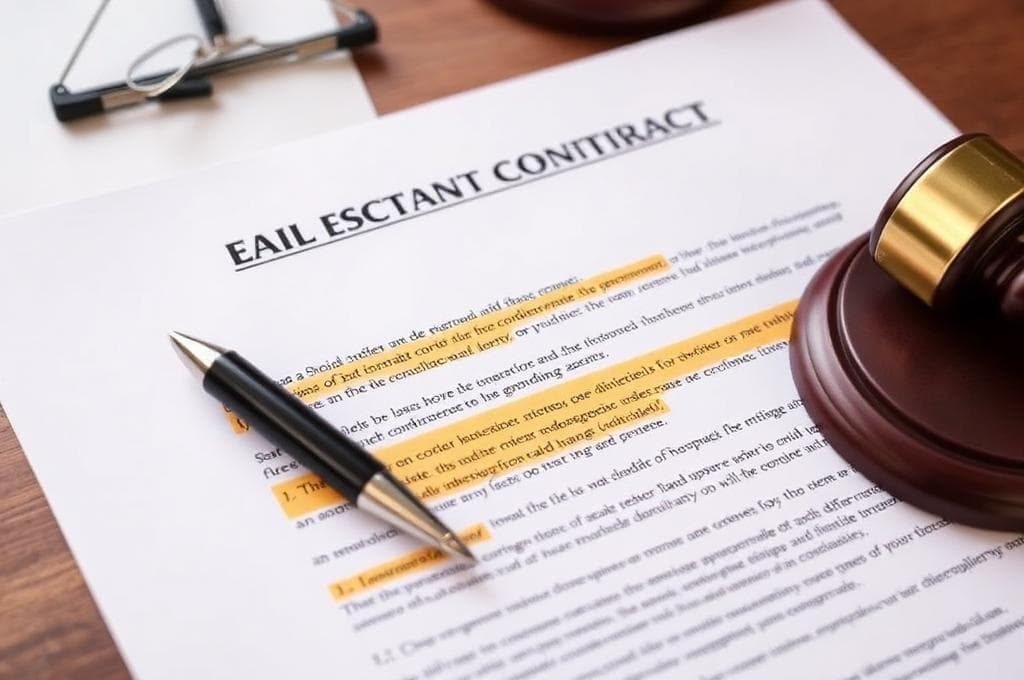
Contingencies are contract conditions that allow you to back out if something goes wrong. Understanding them protects you from being forced to buy a home with problems you can't afford to fix.
Key Takeaways
- Contingencies are conditions that allow you to back out if something goes wrong
- Key contingencies: inspection, appraisal, financing, and title
- Each contingency has a deadline (7-30 days typically)
- Removing contingencies shows strength but increases risk
- Don't waive critical contingencies to be competitive
What Are Contingencies?
This is an important real estate decision, and you deserve clarity, confidence, and expert guidance every step of the way.
A contingency is a condition that must be satisfied for the contract to be binding. If the condition isn't met, you can back out of the deal without losing your earnest money.
For example, an inspection contingency says: "If the inspection reveals major problems, the buyer can renegotiate, request repairs, or walk away." Without this contingency, you're obligated to buy even if the home has $50,000 in repairs needed.
Think of contingencies as protection. They're your safety net if something unexpected happens.
Standard Contingencies in Home Purchases
Inspection contingency: Gives you 7-10 days to hire a home inspector and review findings. If major problems are found, you can renegotiate the purchase price, request the seller make repairs, or walk away. The earnest money is returned if you invoke this contingency.
Appraisal contingency: Protects you if the home appraises below the purchase price. If a $400,000 home appraises at $375,000, you're not obligated to pay $400,000. You can renegotiate, bring additional cash, or back out.
Financing contingency: Protects you if you can't get financing. If your pre-approval falls through, you can back out. This is standard and expected by sellers. However, it's often the last contingency to be satisfied (right before closing).
Title contingency: Ensures the seller owns the home and can transfer clear title to you. If there are liens, claims, or other title issues, you can walk away. The title company researches this during closing.
Sale of current home contingency: If you're selling your current home to buy this one, your offer might be contingent on your current home selling first. This protects you from owning two homes if your sale falls through. However, this makes your offer weaker in competitive markets—sellers prefer offers without this contingency.
Contingency Deadlines
Each contingency has a deadline. You must satisfy the contingency or invoke it by the deadline. If you miss the deadline, the contingency is waived and you're obligated to proceed.
Typical deadlines:
- Inspection contingency: 7-10 days from contract execution. You must schedule and complete the inspection within this timeframe.
- Appraisal contingency: Usually contingent on the lender ordering the appraisal, so it extends to 21-30 days to allow time for appraisal completion.
- Financing contingency: 21-30 days. Your lender has until this date to approve the loan or you can back out.
- Title contingency: 21-30 days. The title company has until this date to clear title issues or the buyer can back out.
Mark these deadlines on your calendar. Communicate with your agent and lender about timing. Missing a deadline can cost you your earnest money and the deal.
Contingency Removal vs. Satisfaction
There's a difference between satisfying a contingency and removing it:
Satisfying a contingency: The condition is met. Inspection happens without major issues. Appraisal comes in at or above purchase price. Financing is approved. Title is clear. You're obligated to proceed.
Removing a contingency: You voluntarily waive your right to invoke the contingency. You decide to proceed even if the condition isn't perfect. "We inspected the home and found $5,000 in repairs. We've decided to proceed anyway and will handle repairs after closing." You voluntarily remove the inspection contingency.
Don't remove contingencies until you've fully investigated. Some buyers remove contingencies early to appear strong in competitive markets. This is risky. What if the inspection reveals major problems? What if the appraisal comes in low? You've waived your protection.
How Contingencies Affect Your Offer
In a competitive market with multiple offers, contingencies matter. A clean offer with minimal contingencies is stronger than an offer loaded with contingencies.
However, don't remove critical contingencies. Instead, be strategic:
- Tighten timelines: Instead of 10 days for inspection, offer 7 days. This shows you're moving fast.
- Accept "as-is" repairs: Instead of requesting the seller fix items, request a price reduction instead. This speeds up closing.
- Reduce earnest money contingency: Some contracts allow the buyer to reduce earnest money in contingency situations. Waive this reduction to show confidence.
- Keep critical contingencies: Inspection, appraisal, financing, and title contingencies are non-negotiable.
Work with your agent to balance being competitive while protecting yourself.
What Happens When a Contingency Is Invoked
Let's say the inspection reveals $20,000 in needed repairs. You want to invoke the inspection contingency and renegotiate. Here's what happens:
Step 1: You provide the seller with the inspection report and request a price reduction of $25,000 (covering the repairs plus inconvenience).
Step 2: The seller responds. They might accept your reduction, counter-offer with a smaller reduction, or refuse to negotiate.
Step 3: If you reach agreement on a reduced price, you remove the inspection contingency and proceed.
Step 4: If you don't reach agreement and you're within the contingency deadline, you can invoke the contingency and back out. Your earnest money is returned.
Step 5: If you've missed the deadline and the seller hasn't agreed, you're in default. The earnest money is forfeited.
Contingencies and Time
Contingencies have tight deadlines (7-30 days) because sellers want certainty. They can't leave a home off the market forever waiting for inspections or appraisals.
As contingencies are satisfied or removed, the seller's confidence increases. Once all contingencies are satisfied and removed, you're in the "clear to close" phase. At this point, backing out is expensive (you lose earnest money) or impossible (the contract is binding).
Contingencies expire as you get closer to closing. By closing day, typically all contingencies have been satisfied or removed, and the deal is locked in.
Waiving Contingencies: When and When Not To
In competitive markets with multiple offers, sellers sometimes request you waive contingencies. Here's when it's okay and when it's not:
Okay to waive: You've already completed an inspection or appraisal with favorable results. You're confident in the home's condition and value. Waiving the contingency shows you're serious.
Not okay to waive: You haven't inspected or don't know the home's condition. You're waiving to be competitive without information. This is risky.
A smart approach: Negotiate a shorter contingency timeline rather than waiving entirely. Instead of 10 days for inspection, offer 5 days. This shows speed without removing your protection.
Contingency Waivers and Cash Offers
Cash buyers (not financing) often waive financing contingencies because they don't need a loan. However, they still typically include inspection, appraisal (for their own knowledge), and title contingencies.
If you're a cash buyer and a seller asks you to waive all contingencies, think carefully. Inspection and title contingencies protect you regardless of financing.
Have questions about understanding contingencies your safety net in a real estate contract? The team at Thrive.RealEstate is here to help — no obligation, no pressure. We believe everyone deserves expert guidance through life's biggest real estate decisions.
What to Do Next
- Review your contract's contingencies with your agent
- Understand each contingency deadline
- Mark deadlines on your calendar
- Plan your inspection timeline (schedule within first week)
- Monitor appraisal progress with your lender
- Ensure financing is on track
- Request deadline extensions early if needed
- Don't remove contingencies until you've fully investigated
- Communicate with your seller through your agent about contingency updates
Action Checklist
HomeBase — Clear answers. Real people.
What to do next
This article is part of Buying my first home, step 5: What happens after they say yes?