


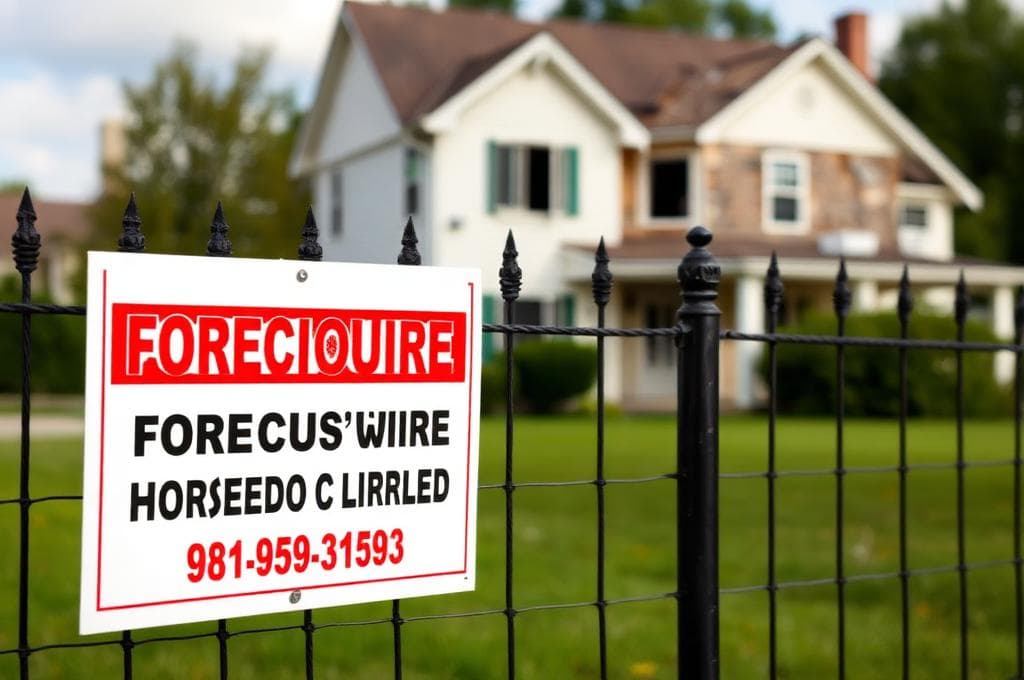
Short sales and foreclosures can offer opportunities to buy properties below market value, but they come with complexities, delays, and risks that most home buyers don't expect. Learn how each process works and what to watch for.
Key Takeaways
- Short sales take 3-6 months for lender approval; the lender's decision isn't guaranteed, and you might wait months only to have your offer denied
- Foreclosure REOs close faster (30-60 days) than short sales but often sell as-is with limited or no inspection allowances
- Distressed properties are cheaper but often need repairs; calculate true value including repair estimates before comparing to market prices
- Mortgage appraisals can come in lower than your offer price, requiring renegotiation or additional out-of-pocket down payment
- Timeline risk is the biggest factor: only pursue short sales if you have 6+ months of flexibility; choose REOs if you need to close quickly
The Distressed Property Market: Opportunity and Complexity
You're scrolling real estate listings and see a property listed at $350,000 in a neighborhood where similar homes sell for $450,000. It's a short sale or a foreclosure. Your heart jumps: opportunity. Your logic pauses: what's the catch?
Short sales and foreclosures can be good deals, but they're not simple purchases. They involve delays, contingencies, and risks that require patience and knowledge. Understanding the process--and the pitfalls--helps you decide if this is a realistic path.
Understanding Short Sales
A short sale occurs when a homeowner owes more on their mortgage than the home is worth, and they want to sell. The lender agrees to accept less than they're owed. Example: homeowner owes $400,000, home is worth $350,000, homeowner sells for $350,000. The lender forgives the $50,000 difference (called a "short" on the sale price).
Why Lenders Accept Short Sales
Lenders prefer short sales to foreclosures. In a foreclosure, the bank must wait months to take the property, then sell it themselves, incurring legal costs, property maintenance, and delays. In a short sale, the homeowner finds a buyer and the bank gets paid faster. For the bank, a short sale with less hassle is preferable to a foreclosure.
The Short Sale Process
- Offer is made. You make an offer on the short sale property at whatever price you negotiate with the listing agent.
- Subject to lender approval. Here's where complexity begins: your offer isn't final. The lender must approve the sale price and terms. The lender reviews the homeowner's hardship (job loss, divorce, health crisis) and decides whether to accept the loss.
- Lender deliberation. This can take weeks or months. The lender might request additional documents: proof of the homeowner's hardship, recent appraisal, title search, property inspection. The homeowner might be underwater on multiple properties; the lender negotiates which ones get short-sold, which go to foreclosure.
- Lender decision. The lender approves, denies, or makes a counteroffer ("we'll accept $360,000, not $350,000"). You might wait 3-6 months only to learn the lender denied the sale.
- Closing. If approved, closing typically follows 2-4 weeks later.
The Risks of Short Sales
Lengthy timeline: Short sales take 3-6 months on average, sometimes longer. You can't predict lender approval speed. If you need a home urgently, a short sale is too risky.
Lender denial: The lender might deny the sale outright. You've waited months, had inspections, got an appraisal--all wasted. Your offer doesn't obligate the lender. The homeowner can't force a sale.
Title issues: Some short sale properties have second mortgages or liens from contractors. If the second lienholder doesn't agree to the short sale, they might place a lien on the property that blocks closing. You could discover this late in the process.
Property condition: Short sale properties often aren't well-maintained. The homeowner facing foreclosure isn't motivated to make repairs. Get a thorough inspection before your offer, knowing that expensive repairs might be needed.
Limited negotiating power: In a normal sale, you can negotiate repairs, warranties, or closing costs. In a short sale, the homeowner and lender have limited flexibility. "As-is" sales are common.
Deficiency judgment: In some states, after a short sale, the lender can sue you (the buyer) for the difference between the sale price and the amount owed. This is rare but possible. Have your attorney review your state's laws.
Understanding Foreclosures
A foreclosure occurs when a homeowner stops paying the mortgage. The lender takes back the property through a legal process. Foreclosures can be purchased in two scenarios: pre-foreclosure (before the lender takes it) or REO (real estate owned--after the lender has taken it).
Pre-Foreclosure Purchase
A homeowner is defaulting on their mortgage. The property is still in their name. You make an offer directly to the homeowner. If they accept, you're purchasing from them (not the lender).
Process is similar to a normal home sale, but faster. The homeowner might be desperate to sell before foreclosure happens (usually within 30-120 days of default). This creates negotiating leverage for the buyer.
Risks: The homeowner might be in denial about their financial situation or might have unrealistic price expectations. They might refuse to make repairs or provide disclosures. The sale is "as-is" in practice.
REO Property (Foreclosure Owned by Lender)
The lender has completed foreclosure and now owns the property. The lender lists it for sale, usually through a real estate agent. You're buying from the bank, not the homeowner.
Process: Standard offer, acceptance, inspection, appraisal, and closing. The lender is motivated to sell (they don't want to be a landlord), so sales move faster than short sales. Timelines are typically 30-60 days from offer to closing.
Risks: Banks often sell REOs "as-is" with no inspections allowed before purchase (inspection waived). You must accept the property in unknown condition. Some banks do allow inspections; negotiate this. The property might have been vacant and poorly maintained: broken pipes, mold, theft of fixtures (copper wiring, appliances, air conditioners--frequently stolen from vacant properties).
Foreclosure Auction
Properties also sell at courthouse auctions. These are risky: no inspections allowed, properties sold strictly as-is, cash payment required immediately (no mortgage financing), and you're bidding against investors who know the market. Courthouse auctions are for experienced investors, not typical home buyers. Avoid unless you're an experienced investor with cash.
Pricing and Value Assessment
Short sales and foreclosures are often cheaper than market-rate homes. But "cheaper" doesn't always mean "better value."
Why They're Priced Lower
Distressed properties have the following factors working against them: the homeowner (in short sale) is forced to sell, the lender (in foreclosure) wants to liquidate quickly, the property might be in poor condition, and the sale is uncertain (lender approval, unknown repairs). Buyers demand a discount for this risk and uncertainty.
Calculating True Value
A foreclosure listed at $300,000 might need $50,000 in repairs. Its true value, fully repaired, is $350,000. Comparable homes in the neighborhood sell for $380,000. So the foreclosure at $300,000 before repairs is cheaper, but after repairs and accounting for time/hassle, is it a good deal? Maybe. Maybe not. Depends on your timeline and tolerance for uncertainty.
Always get a home inspection and repair estimates before offering on a short sale or foreclosure. Factor these costs into whether you're truly getting a deal.
Financing Challenges
Mortgage Approval for Short Sales
Lenders will finance short sales, but many require that the sale close within a specific timeframe (often 90 days max) from offer to closing. If the lender delays their approval past 90 days, your lender might withdraw the pre-approval because the timeline is now uncertain.
Get your mortgage pre-approval with a specific clause: you're willing to finance a short sale, and your pre-approval is good for the expected approval timeline.
Mortgage Approval for REO Foreclosures
REOs sell faster, so mortgage approval is simpler. Lenders can pre-approve you for an REO purchase without hesitation. Standard timeline: 30-60 days from offer to closing.
Appraisal Challenges
Lenders order appraisals for both short sales and REOs. If the property needs repairs, the appraiser might lower the value accordingly. You offered $300,000, but the appraisal comes in at $280,000. Now you have a problem: your lender will only finance $280,000. You either come up with $20,000 more in down payment, renegotiate with the seller, or walk away.
This happens frequently with distressed properties. Budget for this risk.
What to Do Next
- Decide: do you have patience for a 3-6 month short sale timeline, or do you need a home faster (REO or normal sale)?
- Get pre-approved for a mortgage, clearly stating your willingness to finance short sales or foreclosures.
- If pursuing a short sale: make your offer contingent on lender approval by a specific date (no more than 6 months). Don't wait indefinitely.
- For any short sale or foreclosure: get a home inspection and repair estimates before finalizing your offer.
- Consider a preliminary appraisal to avoid surprises when the lender orders their appraisal.
- Work with an experienced real estate agent who knows your market's short sales and REO landscape.
- Have your attorney review the purchase agreement and title, especially for short sales (possible liens or second mortgages).
- Budget for: inspection, appraisal, title insurance, and repair estimates. Don't assume "distressed" automatically means "good deal."
Have questions? The team at Thrive.RealEstate is here to help -- no obligation, no pressure. We believe everyone deserves expert guidance through life's biggest real estate decisions.
When life changes, we handle the real estate so you can handle what matters.
Action Checklist
HomeBase — Clear answers. Real people.
What to do next
This article is part of Buying an investment property, step 4: How do I find a deal that's actually a deal?