


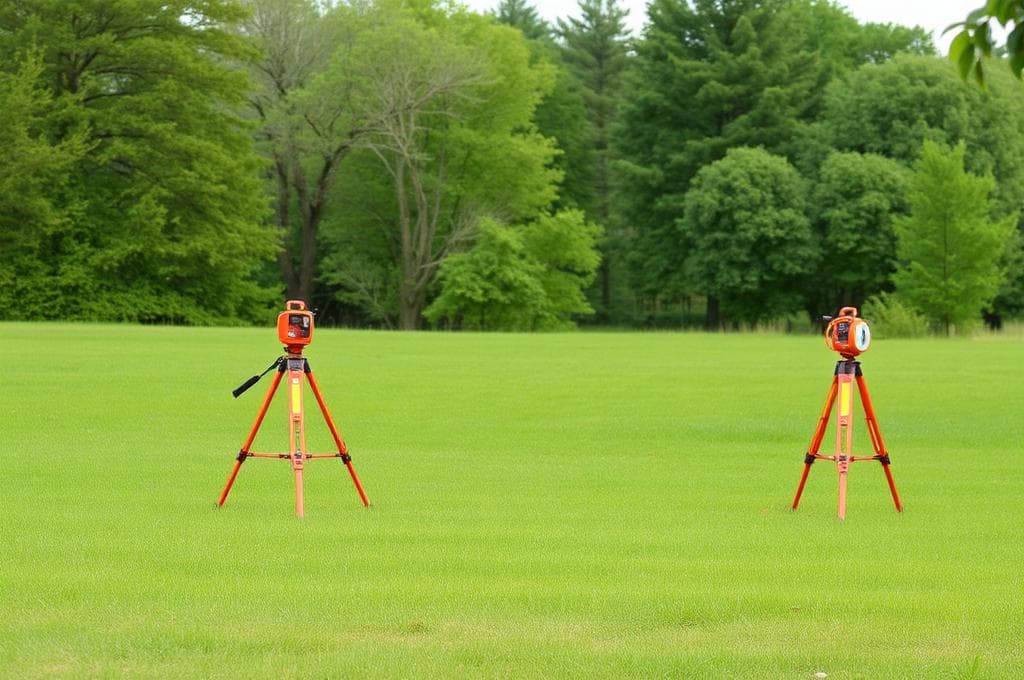
Buying raw land is completely different from buying a house. You're not dealing with existing structures—you're dealing with zoning, utilities, access, and the feasibility of what you can actually build. This guide explains what to investigate before you buy a piece of land so you don't end up with an unusable property.
Key Takeaways
- Zoning determines what you can legally build; confirm your intended use is permitted in writing from the planning department before buying
- Utilities (water, sewer, electric) might not be available or affordable—verify costs and feasibility before making an offer
- Land without recorded legal access or with landlocked conditions is worthless; always verify property access is clearly documented
- Environmental issues (wetlands, flood zones, contamination) can prevent development or require expensive mitigation; investigate before buying
- Total land development cost includes purchase price plus utilities, septic/well, survey, and carrying costs—often much higher than the land price alone
Why Land Investment Is Risky (And Why People Still Do It)
Closing day marks one of life's biggest achievements. You deserve to know exactly what's happening at every step so you can feel confident, not overwhelmed.
People buy land for a few reasons: they want to build a home on it, they want to invest in appreciation as the area develops, or they want it for agricultural or recreational use. The appeal is clear—land is tangible, you own it free and clear eventually, and there's no tenant to manage.
But land is also risky. Unlike a house with existing systems you can inspect, land has hidden problems you might not discover until you're deep into building plans. You might buy land thinking you can build a home on it, only to discover that zoning doesn't allow residential development. You might plan to build on 5 acres, only to learn the well can't provide enough water or the septic system won't pass inspection. These discoveries happen after you've bought the land, and they're expensive.
A house has a well-defined purpose—people live in it. Land has unlimited potential purposes, but that potential is constrained by zoning, utilities, access, and environmental factors. Before you buy, you need to verify that your intended use is actually possible.
Types of Land and Their Characteristics
Residential Vacant Land
Land in residential neighborhoods zoned for single-family homes. This is what most first-time land buyers purchase—they want to build their dream home on a cleared lot. These properties usually have utilities nearby (water, sewer, electric) or need minimal infrastructure. Price ranges vary wildly by location ($20,000 in rural areas to $500,000+ in expensive markets).
Commercial Land
Land zoned for retail, office, or mixed-use. These are bigger purchases ($300,000+) and require more complex financing and environmental analysis. Most owner-operators and small investors avoid this. It's for sophisticated investors.
Agricultural or Raw Land
Larger parcels (5+ acres) with no development or minimal infrastructure. These are cheap per acre ($2,000-$10,000 per acre in most of the country) but require the most work if you want to build on them. You might need to install a well, septic, driveway, electric service—major costs that can easily reach $30,000-$100,000+ depending on conditions.
Infill Land
A lot in an established neighborhood where the surrounding homes already exist. The house (if there was one) has been demolished. These are more expensive than raw land because utilities are nearby and zoning is known, but cheaper than buying an existing house.
The Due Diligence Checklist: What You MUST Check Before Buying
1. Zoning and Land Use
This is the most critical thing. Zoning determines what you can legally do with the land. It's set by your local government (city or county). Go to the assessor's office or planning department website and find the zoning designation for the property.
Common zoning designations:
- R-1: Single-family residential. You can build one home. Period.
- R-2 or R-3: Multi-family residential. You can build apartment buildings or duplexes (usually).
- C-1 or C-2: Commercial. You can build retail, office, restaurants (depending on specific conditions).
- A or AG: Agricultural. You can farm. Building a home might be restricted or require special approval.
- MU (Mixed Use): Typically allows residential and commercial in the same development.
If you want to build a single-family home, the land must be zoned R-1 (or equivalent). If the land is zoned agricultural or commercial, you might not be able to build a home without a zoning variance, which is expensive, time-consuming, and might be denied.
What to check:
- Current zoning designation
- Minimum lot size for your intended use (you might have 2 acres but need 5 acres minimum)
- Setback requirements (distance from property lines to structures)
- Height restrictions
- Parking requirements (if commercial)
- Any pending zoning changes in the area that might affect your property value
Cost to investigate: Free to $300 (for zoning attorney to research).
2. Utilities (Water, Sewer, Electric, Gas)
Existing homes have utilities already connected. Land might not. If there's no water service, you need a well. If there's no sewer, you need a septic system. If there's no electric, you need to run lines (extremely expensive). You need to understand what's available and what you'll need to install.
Water: Is municipal water available? If yes, you can connect for roughly $3,000-$10,000 (one-time). If no, you need a well. Wells cost $5,000-$15,000 to drill, but that's only if the well can produce adequate water. In some areas, wells fail or produce limited water. You'll need a well water test ($150-$300).
Sewer: Is municipal sewer available? If yes, you can connect for $5,000-$20,000. If no, you need a septic system. A septic system costs $8,000-$20,000 to install. Before you install, the soil must pass a perc test (percolation test—does the soil drain adequately?). If the soil doesn't percolate well, a conventional septic system won't work and you'll need an alternative system that costs $20,000-$50,000+. Perc test costs $300-$600.
Electric: Is electric service available at the road? If yes, you need to run lines to your house ($2,000-$10,000). If no, you need to extend service from a distant source, which can cost $50,000-$200,000+. This is a deal-breaker if the cost is excessive.
Gas: Natural gas might be available, or you might need propane. Propane requires a tank ($2,000-$5,000) and regular delivery. This is less critical than water and electric but affects your utility costs long-term.
What to check:
- Contact the water utility: is service available at the property? If not, is there a public well you can connect to, or do you need a private well?
- Contact the sewer authority: is service available? If not, is your soil suitable for septic?
- Contact the electric utility: is service available at the road? What's the cost to run lines to the property?
- Contact the gas utility: is service available? If propane, how far away is the supplier?
- Get written estimates or availability letters from all utilities
Cost to investigate: $300-$1,000 (for perc test if septic is needed, well test if applicable).
3. Access and Road Rights
You need legal access to the property. This seems obvious, but problems arise. Some land is landlocked—surrounded by other properties with no road access. You'd need an easement (legal right) to cross neighboring property to reach the road. Easements cost money and might not even be available.
What to check:
- Is the property directly on a public road? If yes, you're fine.
- If not, is there a recorded easement giving you access rights? (Check the deed and title report)
- Is the driveway on your property or on a neighboring property?
- If the driveway crosses a neighbor's property, is there a recorded easement? What are the terms (can they block it, revoke it)?
- Is the road public or private? If private, who maintains it and what are the maintenance costs?
Cost to investigate: $150-$400 (title report and deed review).
4. Title and Easements
Get a title report (usually $150-$400) before you make an offer. The title report reveals easements, liens, and restrictions on the property.
Common easements you'll find:
- Utility easements: Electric, gas, water, or sewer companies have the right to access the property to maintain lines. This is normal and expected.
- Right-of-way easements: Your neighbor has the right to cross your property to access the road. This could be a problem if you're denied right-of-way.
- Conservation easements: Land is restricted to preserve natural areas. You can own it but can't develop it. This destroys property value.
Common restrictions:
- Deed restrictions: "No commercial use," "home must be 2,000+ sq ft," "no mobile homes." These can be enforced by neighbors or homeowners associations.
- Covenants: Similar to restrictions but enforceable through a homeowners association.
What to check:
- Get a full title report
- Review all easements—are they compatible with your plans?
- Review all restrictions and covenants—do they limit your intended use?
- Check for liens (unpaid debts against the property)
- Verify there are no environmental holds or violations on the property
Cost to investigate: $150-$400 for title report.
5. Environmental Issues
Certain land has environmental restrictions that prevent or limit development. Wetlands, flood zones, and contaminated sites are examples.
Wetlands: Protected by federal law. If your property includes wetlands, you might not be able to build on that portion. The USDA has online tools to check if property contains wetlands. Many states have additional wetland protections.
Flood zones: Properties in 100-year flood zones need flood insurance (required by lenders) and might have restrictions on development. Check FEMA flood maps (free online).
Contamination: Former industrial sites, gas stations, or dry cleaners might have soil contamination. A Phase I Environmental Assessment ($1,500-$4,000) reveals known contamination. Phase II testing (soil sampling, $5,000-$15,000+) determines the extent if Phase I finds concerns.
Archaeological sites: Some land contains Native American sites or historic buildings. Development might be restricted. Contact your state's historic preservation office.
What to check:
- Use USDA wetlands mapper to see if property contains wetlands
- Check FEMA flood maps to see if property is in a flood zone
- Research the property's history—was it ever industrial, commercial, or mixed use?
- For high-risk properties, order Phase I Environmental Assessment
- Check state historic preservation databases for known sites on or near the property
Cost to investigate: Free-$4,000 (Phase I Assessment if high-risk).
6. Soil Conditions and Suitability
Soil type affects what you can build and what systems you can use. Clay soil might be great for development but problematic for septic. Sandy soil might support septic but be unstable for foundations. Limestone areas have sinkhole risk. Expansive soils expand and contract with moisture, causing foundation cracking.
What to check:
- If septic needed, get a perc test (soil drainage test). Cost: $300-$600
- For building, check historical geological surveys. Contact your county extension office for soil maps and descriptions
- In limestone areas, check for sinkhole history. USGS has sinkhole maps for certain states
- In areas with expansive soils, budget for special foundation systems
Cost to investigate: $300-$600 for perc test if septic is needed.
7. Survey and Boundaries
You need to know exactly where the property boundaries are. A survey (usually $300-$1,500) establishes this. Without a survey, you might build a fence or structure that encroaches on a neighbor's property, leading to legal disputes and expensive corrections.
At minimum, get a boundary survey showing property lines. If you're planning to build, get a mortgage survey that also shows where structures can be placed relative to setback requirements.
Cost to investigate: $300-$1,500 for survey.
8. Deed Restrictions and Homeowners Associations
Subdivision land often has strict restrictions. A "planned community" might require homes to be a certain style, certain size, or maintain membership in a homeowners association (HOA). Some HOAs have $300+ monthly fees. Others have $30. You need to understand the obligations before you buy.
What to check:
- Get a copy of all deed restrictions (from the title report or subdivision documents)
- Review HOA covenants, conditions, and restrictions (CC&Rs) if applicable
- Understand monthly HOA fees and what they cover
- Ask the HOA for records of recent enforcement actions or disputes
Cost to investigate: Free-$300 (HOA docs might have a copying fee).
The Financing Challenge
Getting a loan for raw land is harder than getting a mortgage for a house. Most banks won't finance raw land because there's no collateral (a finished home) to seize if you default. You'll need:
- 20-30% down (sometimes more)
- Strong credit (700+)
- Proof of funds for construction if you plan to build
- Sometimes a pre-approved construction loan showing you have financing for the actual home
Interest rates for land loans are higher than mortgages—1-3% higher. A land loan for $200,000 might be at 8-9% when mortgage rates are at 6.5%.
The best option if you're planning to build: get a construction-to-permanent loan. This single loan covers both the land and the construction, converting to a standard mortgage when the home is complete. These are easier to qualify for because the lender sees the finished home as collateral.
Common Mistakes People Make When Buying Land
Mistake 1: Assuming Your Intended Use Is Allowed
You see beautiful 5-acre property and assume you can build a home. You never check zoning. Later, you learn the land is zoned agricultural and you need a variance to build residential. The variance costs $3,000-$10,000 and might be denied. You're stuck with land you can't use as intended.
Mistake 2: Not Investigating Utilities
You buy land assuming municipal water is available. You don't verify. After closing, you learn the water line is 2 miles away and connection costs $80,000. This is a deal-killer you should have discovered before buying.
Mistake 3: Buying Land Locked Without Legal Access
The land is cheap because it's not directly on a road. You assume you can use the neighbor's driveway. There's no recorded easement, so technically you don't have the right. The neighbor refuses access. You can't reach your property. This is a nightmare.
Mistake 4: Ignoring Environmental Issues
You buy land in a flood zone without understanding that you'll need expensive flood insurance forever. Or you buy land with wetlands and later learn you can't build on 40% of the property. These are costly discoveries.
Mistake 5: Not Getting a Survey
You build a fence or home based on where you think the boundary is. After the fact, a survey reveals you're 5 feet over the line. Now you have to move the fence or face a lawsuit. A survey costs $1,000. Moving a fence costs $10,000+.
Mistake 6: Underestimating Total Development Costs
The land is cheap at $80,000. But adding a well ($10,000), septic ($15,000), driveway ($8,000), and electric service ($15,000) brings the total to $128,000 before you even build a home. You underestimated the true cost of the land.
The Timeline and Carrying Costs
Buying land to build on later is different from buying occupied property. Your timeline matters. If you buy land for $100,000 and don't build for 3 years, you're paying property taxes, insurance, and maybe a land loan during that time. That's easily $15,000-$25,000+ in carrying costs while you wait.
Consider carrying costs when evaluating whether land is a good investment. A cheap piece of land might not be cheap once you factor in years of taxes and interest while you wait to develop it.
What to Do Next
- Contact the local planning/zoning department and confirm zoning for your intended use is allowed
- Request written confirmation that your planned development (home, business, etc.) is permitted on the property
- Contact water utility to confirm service availability and connection costs
- Contact sewer authority to confirm service availability; if septic needed, budget for perc test ($300-$600)
- Contact electric utility for service availability and line extension costs
- Request a title report ($150-$400) before making an offer
- Review the title report for easements, liens, restrictions, and covenants
- Check USDA wetlands mapper for wetlands on the property
- Check FEMA flood maps to see if property is in flood zone
- Order a survey ($300-$1,500) to establish exact property boundaries
- Research property history for environmental concerns; consider Phase I Environmental Assessment if high-risk
- If subdivision land, request and review HOA CC&Rs and fee information
- Get an estimate from a builder or contractor for development costs (well, septic, driveway, etc.)
- Research historical soil types and conditions through county extension office or geological surveys
- Create a detailed development budget including land, utilities, survey, permits, and carrying costs
- Get pre-approved for land financing before making an offer (shows seller you're serious)
- Don't make an offer until all due diligence is complete
Have questions about buying land zoning, utilities, access, and what to check before you close? The team at Thrive.RealEstate is here to help — no obligation, no pressure. We believe everyone deserves expert guidance through life's biggest real estate decisions.
Action Checklist
HomeBase — Clear answers. Real people.
What to do next
This article is part of Selling land, step 1: How is land priced, and what is mine worth?